
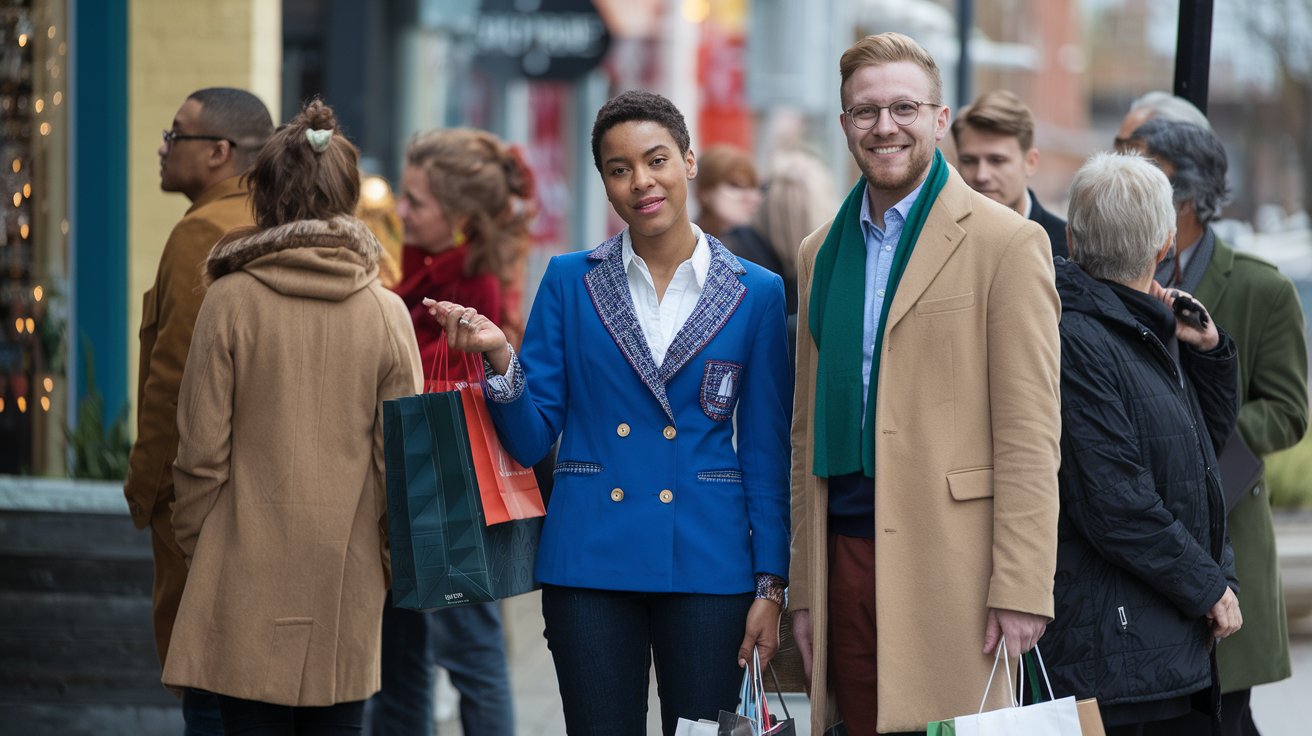
High street fashion refers to affordable, trendy clothing sold at mainstream retail stores that capture current fashion trends without the premium price tag of designer brands. In the United States, this concept translates to accessible fashion found at popular retailers like H&M, Zara, and Target, offering stylish clothing that allows everyday consumers to participate in fashion trends at reasonable prices.
Understanding High Street Fashion in America
High street fashion originated in the United Kingdom, where “high street” refers to the main shopping district in towns and cities. In American context, this concept represents the democratization of fashion, making trendy styles accessible to the average consumer. The term encompasses clothing that bridges the gap between luxury designer pieces and basic everyday wear, offering fashion-forward designs at moderate prices.
The American version of high street fashion includes retailers like Forever 21, Urban Outfitters, and Anthropologie, which quickly adapt runway trends for mass market consumption. These brands focus on creating affordable interpretations of high-end fashion, allowing consumers to experiment with current trends without significant financial investment. The sector has grown substantially, with the US fashion retail market reaching over $350 billion in 2024.
Key Characteristics of High Street Fashion
High street fashion brands share several defining characteristics that distinguish them from both luxury and fast fashion sectors. These retailers typically offer trend-driven designs with moderate quality materials, seasonal collections that refresh every 6-8 weeks, and price points ranging from $20-150 for most items. The focus remains on creating accessible fashion that allows consumers to express personal style without breaking their budget.
Evolution of American High Street Fashion
The evolution of high street fashion in America has been shaped by changing consumer behaviors and digital transformation. Since 2020, there’s been a 40% increase in online shopping for mid-tier fashion brands, with consumers seeking versatile pieces that work for both professional and casual settings. Social media influence has accelerated trend cycles, pushing high street brands to become more agile in their design and production processes.
High Street Fashion vs Fast Fashion: Key Differences
Understanding the distinction between high street fashion and fast fashion is crucial for conscious consumers. While both categories offer affordable clothing, they differ significantly in quality, production ethics, and sustainability practices. High street fashion typically emphasizes better construction, more durable materials, and longer-lasting designs compared to ultra-fast fashion alternatives.
Fast fashion brands like Shein and Romwe focus on extremely low prices and rapid trend turnover, often compromising on quality and ethical production standards. In contrast, high street fashion brands maintain higher quality standards while still offering competitive pricing. The average garment from a high street brand costs 30-50% more than fast fashion equivalents but typically lasts 3-5 times longer.
Quality and Durability Comparison
High street fashion quality standards generally exceed those of fast fashion retailers. These brands invest in better fabric sourcing, more robust construction techniques, and quality control processes. Consumer reports from 2024 indicate that high street garments maintain their appearance and fit after an average of 50 washes, compared to 15-20 washes for typical fast fashion items.
Pricing Strategy Differences
The pricing strategy of high street fashion reflects a balance between accessibility and quality. These brands typically price items 200-400% higher than fast fashion alternatives but 60-80% lower than designer brands. This positioning allows them to maintain profit margins while investing in better materials and more ethical production practices, appealing to value-conscious consumers who prioritize both style and sustainability.
Popular American High Street Fashion Brands
American high street brands have established themselves as leaders in accessible fashion, with companies like Gap, Banana Republic, and J.Crew setting industry standards for quality and style. These brands have successfully adapted to changing consumer preferences by incorporating sustainable practices and expanding their size inclusivity. The sector has seen significant growth, with established brands reporting 15-25% revenue increases in 2024.
Emerging high street fashion examples include brands like Everlane, Reformation, and Madewell, which have gained popularity among millennials and Gen Z consumers. These newer entrants focus on transparency, sustainability, and ethical production while maintaining the accessible price points that define the high street category. Their success demonstrates the evolving expectations of modern consumers who seek both style and social responsibility.
Established High Street Retailers
Established high street retailers like Nordstrom Rack, TJ Maxx, and Marshalls have adapted their business models to compete in the modern fashion landscape. These retailers offer designer and high-quality brands at reduced prices, creating a unique position within the high street category. Their success stems from providing access to premium fashion at affordable prices through off-season purchasing and overstock arrangements.
Emerging Sustainable High Street Brands
The rise of sustainable high street fashion represents a significant shift in consumer preferences, with brands like Girlfriend Collective, Kotn, and Pact leading the charge. These companies prioritize eco-friendly materials, fair labor practices, and transparent supply chains while maintaining competitive pricing. Market research indicates that 70% of consumers under 35 are willing to pay 10-20% more for sustainably produced clothing.
High Street Fashion Trends and Styling
High street fashion trends in 2024-2025 reflect a blend of comfort, versatility, and personal expression. Key trends include oversized blazers, wide-leg trousers, vintage-inspired denim, and elevated loungewear that transitions from home to office. The influence of social media has accelerated trend adoption, with high street brands now releasing micro-collections that respond to viral fashion moments within weeks.
Styling high street fashion effectively involves mixing pieces from different price points and categories to create cohesive, personal looks. Fashion experts recommend investing in quality basics from high street brands while experimenting with trendier pieces from fast fashion retailers. This approach allows consumers to build a versatile wardrobe that balances current trends with timeless style elements.
The Future of High Street Fashion
The future of high street fashion is being shaped by technological innovation, sustainability demands, and changing consumer behaviors. Industry analysts predict that successful high street brands will increasingly adopt direct-to-consumer models, personalized shopping experiences, and circular fashion practices. The integration of artificial intelligence and data analytics is enabling brands to predict trends more accurately and reduce waste through more precise inventory management.
Digital transformation continues to revolutionize the high street fashion sector, with augmented reality try-on experiences, virtual styling services, and social commerce becoming standard features. Brands that successfully combine physical and digital retail experiences are seeing 25-40% higher customer engagement rates compared to traditional retailers. The emphasis on omnichannel retail strategies reflects the evolving expectations of modern consumers who seek seamless shopping experiences across all touchpoints.
Related video about what is high street fashion
This video complements the article information with a practical visual demonstration.
Frequently Asked Questions
What is meant by high street fashion?
High street fashion refers to affordable, trendy clothing sold at mainstream retail stores that capture current fashion trends without designer price tags. In America, this includes retailers like H&M, Zara, and Target that offer stylish clothing at accessible prices, typically ranging from $20-150 for most items.
What is considered a high street brand?
High street brands are retailers that offer fashion-forward designs at moderate prices, including stores like Gap, Banana Republic, Urban Outfitters, and Anthropologie. These brands bridge the gap between luxury designer pieces and basic everyday wear, focusing on trend-driven designs with reasonable quality.
What is the American version of High Street?
The American version of high street fashion includes mainstream retailers found in shopping malls and online platforms that offer affordable, trendy clothing. This encompasses brands like Forever 21, H&M, Zara, Target’s fashion lines, and department stores like Nordstrom Rack that provide accessible fashion to everyday consumers.
How does high street fashion differ from fast fashion?
High street fashion typically offers better quality materials, more durable construction, and longer-lasting designs compared to fast fashion. While fast fashion focuses on extremely low prices and rapid trend turnover, high street brands maintain higher quality standards and more ethical production practices, though at slightly higher price points.
What are current high street fashion trends for 2024-2025?
Current high street fashion trends include oversized blazers, wide-leg trousers, vintage-inspired denim, elevated loungewear, and versatile pieces that transition from casual to professional settings. Sustainable materials and ethical production are also becoming increasingly important trends in the high street fashion sector.
Why is high street fashion popular in America?
High street fashion is popular in America because it democratizes fashion by making trendy styles accessible to average consumers. It offers the opportunity to experiment with current trends without significant financial investment, while providing better quality than ultra-fast fashion alternatives and remaining much more affordable than designer brands.
| Fashion Category | Price Range | Key Benefits |
|---|---|---|
| High Street Fashion | $20-150 | Balanced quality, trendy designs, accessible pricing |
| Fast Fashion | $5-30 | Ultra-low prices, rapid trend adoption |
| Designer Fashion | $200-2000+ | Premium quality, exclusive designs, luxury materials |
| Sustainable High Street | $30-180 | Eco-friendly materials, ethical production, durability |

