
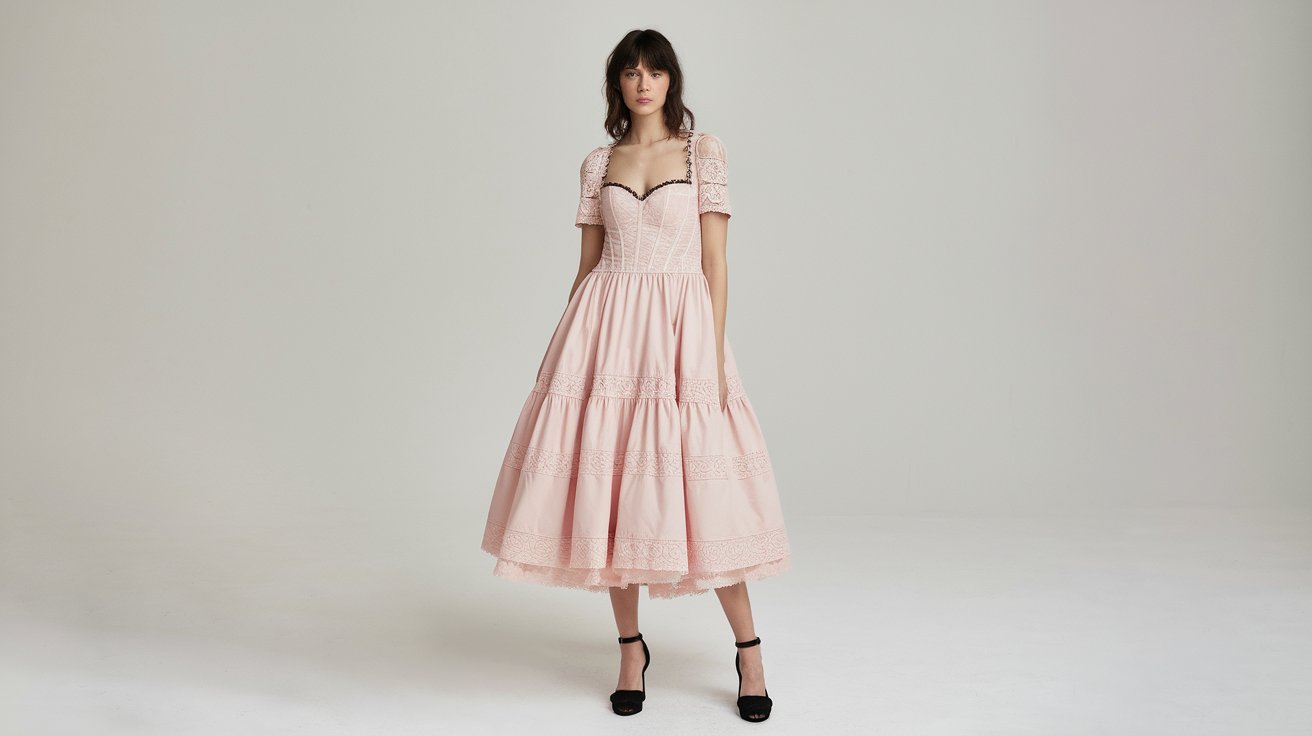
A babydoll dress is a short, loose-fitting dress that features a high waistline positioned just below the bust, creating a flowing silhouette that skims over the body. This distinctive style originated in the 1960s and has become a timeless wardrobe staple for women seeking both comfort and femininity. The babydoll dress style is characterized by its empire waist, A-line shape, and typically falls anywhere from mid-thigh to knee length, making it a versatile choice for various occasions.
Definition and Characteristics of a Babydoll Dress
A babydoll dress is defined by its signature high waistline that sits just beneath the bust, creating an empire waist silhouette. This positioning allows the fabric to flow freely from the chest down, creating a loose, comfortable fit that doesn’t cling to the body. The dress type typically features short sleeves or sleeveless designs, though long-sleeved variations exist for different seasons and occasions.
The length of a babydoll dress usually ranges from mid-thigh to just above the knee, making it shorter than most traditional dress styles. The fabric choices vary widely, from lightweight cotton and chiffon for summer wear to heavier materials like wool blends for cooler weather. What makes this dress style particularly appealing is its ability to create a youthful, playful appearance while maintaining sophistication and elegance.
History and Evolution of Babydoll Dresses
The babydoll dress first emerged in the 1960s as part of the mod fashion movement, representing a departure from the structured, form-fitting dresses of previous decades. The style was heavily influenced by the youth culture of the time, with designers like Mary Quant and André Courrèges popularizing the look. The name babydoll itself comes from the resemblance to children’s clothing and nightwear, emphasizing the innocent, youthful aesthetic that defined the era.
Throughout the 1970s and 1980s, the babydoll dress evolved to include various prints, fabrics, and styling details. The 1990s saw a revival of the style, particularly in the grunge and alternative fashion scenes, where it was often paired with combat boots and leather jackets. In the 2000s, celebrities like Kate Moss and Sienna Miller brought the babydoll dress back into mainstream fashion, and it has remained a popular choice ever since.
Who Should Wear Babydoll Dresses
The babydoll dress is incredibly versatile and flatters various body types, making it accessible to women of all shapes and sizes. Women with smaller busts particularly benefit from this style, as the high waistline creates the illusion of a fuller chest while the flowing fabric adds volume to the torso. The dress style is also excellent for those who want to minimize their midsection, as the loose fit doesn’t emphasize the waist or stomach area.
Petite women often find that babydoll dresses work exceptionally well because the shorter length doesn’t overwhelm their frame, while the high waistline creates the appearance of longer legs. Taller women can also wear this style effectively, especially when choosing longer versions or layering with tights and boots. The key is selecting the right proportions and styling to complement your individual body type and personal aesthetic preferences.
Essential Styling Tips for Babydoll Dresses
When styling a babydoll dress, consider the occasion and season to make the most appropriate choices. For casual daytime wear, pair your dress with flat sandals or sneakers and minimal jewelry for a relaxed, effortless look. For more formal occasions, elevate the style with heeled boots or pumps and statement accessories that complement the dress’s feminine silhouette.
Layering is crucial for extending the versatility of your babydoll dress throughout different seasons. During colder months, add a fitted cardigan or blazer to define your silhouette while maintaining the dress’s flowing lines. Tights or leggings paired with ankle boots create a stylish winter look that keeps you warm while showcasing the dress style effectively.
Choosing the Right Print and Color
The print and color of your babydoll dress significantly impact its overall appearance and versatility. Solid colors like black, navy, or burgundy offer maximum versatility and can be dressed up or down for various occasions. Floral prints are classic choices that enhance the feminine nature of the babydoll dress, while geometric patterns can add a modern, contemporary edge to the traditional silhouette.
Seasonal Styling Adaptations
Adapting your babydoll dress for different seasons ensures year-round wearability. In summer, choose lightweight fabrics like cotton or linen and pair with sandals or canvas shoes. For fall and winter, layer with tights, boots, and outerwear while selecting dresses in heavier fabrics like wool blends or ponte knits that provide additional warmth and structure.
Fabric Choices and Construction Details
The fabric selection for a babydoll dress significantly affects its drape, comfort, and overall appearance. Lightweight materials like chiffon, georgette, and silk create beautiful flowing movement and are ideal for warmer weather or special occasions. Cotton and cotton blends offer durability and comfort for everyday wear, while maintaining the characteristic loose fit that defines the babydoll dress style.
Construction details such as gathering at the bust line, adjustable straps, and side seams all contribute to the dress’s fit and appearance. Quality babydoll dresses feature reinforced seams and proper lining to ensure the garment maintains its shape and provides appropriate coverage. The neckline variations range from scoop and round necks to V-necks and off-shoulder styles, each offering different levels of sophistication and coverage.
Different Types of Babydoll Dresses
The babydoll dress category encompasses various styles and designs to suit different preferences and occasions. The classic daytime babydoll features a simple silhouette with minimal embellishments, perfect for casual wear and everyday activities. Evening versions often incorporate luxurious fabrics, beading, or lace details that elevate the dress for formal occasions and special events.
Maternity babydoll dresses have gained popularity due to their comfortable, non-restrictive fit that accommodates changing body shapes. These designs often feature adjustable elements and softer fabrics that provide comfort throughout pregnancy. Additionally, babydoll nighties represent the intimate apparel version of this style, designed specifically for sleepwear and featuring more delicate fabrics and romantic details.
Casual vs. Formal Babydoll Dresses
Casual babydoll dresses typically feature simple designs, comfortable fabrics, and minimal embellishments, making them perfect for everyday wear, shopping, or casual social gatherings. These dresses often come in cotton, jersey knits, or lightweight blends that prioritize comfort and easy care over formal appearance.
Specialty Babydoll Dress Styles
Specialty babydoll dresses include designs for specific occasions such as beach coverups, festival wear, or romantic evening attire. Babydoll dresses for honeymoon often feature delicate lace, silk fabrics, and romantic details that create an intimate, feminine aesthetic perfect for special romantic occasions and getaways.
Current Trends and Modern Interpretations
In 2024-2025, babydoll dresses have experienced a significant revival in American fashion, with contemporary designers reimagining the classic silhouette for modern women. Current trends include asymmetrical hemlines, cutout details, and mixed fabric combinations that add visual interest while maintaining the dress’s characteristic flowing shape. Sustainable fashion has also influenced babydoll dress production, with many brands now offering eco-friendly versions made from organic cotton and recycled materials.
Social media influencers and celebrities have played a crucial role in popularizing updated versions of the babydoll dress, showcasing various styling options and demonstrating the style’s versatility. The rise of cottagecore and romantic fashion aesthetics has particularly benefited this dress style, as it perfectly embodies the feminine, carefree spirit that these trends celebrate.
Shopping Guide and Fit Considerations
When shopping for a babydoll dress, proper fit is essential for achieving the desired silhouette and comfort level. The bust area should fit snugly but not tightly, allowing the fabric to flow naturally from the high waistline. The dress should skim over the body without clinging, and the length should be appropriate for your height and comfort level.
Quality indicators include well-constructed seams, appropriate lining, and durable fabric that maintains its shape after washing. Consider your lifestyle and intended use when selecting a babydoll dress – choose easy-care fabrics for everyday wear and more delicate materials for special occasions. The best babydoll dresses offer a balance of style, comfort, and versatility that makes them valuable additions to any wardrobe.
Related video about what is a babydoll dress
This video complements the article information with a practical visual demonstration.
Your questions answered
Why are they called baby doll dresses?
Babydoll dresses are called this because their loose, flowing silhouette resembles children’s clothing and nightwear. The name originated in the 1960s when the style first became popular, emphasizing the innocent, youthful appearance that the high waistline and loose fit create. The term also references the dress’s similarity to traditional baby dolls’ clothing, with its simple, unfitted design.
What body type does a babydoll dress look good on?
Babydoll dresses flatter various body types, particularly those with smaller busts as the high waistline creates the illusion of a fuller chest. They’re excellent for minimizing the midsection and work well on petite women by creating the appearance of longer legs. Apple-shaped figures benefit from the loose fit that doesn’t emphasize the waist, while pear-shaped women can use the flowing fabric to balance their proportions.
Are babydoll dresses in style for 2025?
Yes, babydoll dresses are definitely in style for 2025. They’ve experienced a significant revival in American fashion, with contemporary designers creating modern interpretations featuring asymmetrical hemlines, cutout details, and sustainable fabrics. The rise of cottagecore and romantic fashion aesthetics has particularly boosted their popularity, making them a key trend for the year.
What does babydoll style mean in fashion?
Babydoll style in fashion refers to a design aesthetic characterized by loose, flowing silhouettes with high waistlines positioned just below the bust. This style emphasizes femininity, comfort, and a youthful appearance through its empire waist construction and A-line shape. The babydoll style can be found in dresses, tops, and nightwear, all sharing the common elements of a fitted bust area with flowing fabric below.
How do you wear a babydoll dress in winter?
To wear a babydoll dress in winter, layer it with tights or leggings and pair with ankle boots or knee-high boots. Add a fitted cardigan, blazer, or coat to maintain the dress’s silhouette while staying warm. Choose babydoll dresses in heavier fabrics like wool blends or ponte knits, and consider adding scarves and warm accessories to complete the cold-weather look.
What is a babydoll dress made of?
Babydoll dresses are made from various fabrics depending on their intended use and season. Common materials include lightweight cotton, chiffon, georgette, and silk for summer wear, while heavier options like wool blends, ponte knits, and jersey are used for cooler weather. The choice of fabric affects the dress’s drape, comfort level, and overall appearance, with flowing materials enhancing the characteristic loose silhouette.
| Key Aspect | Important Details | Benefit |
|---|---|---|
| Silhouette | High waistline below bust, flowing A-line shape | Flatters various body types, comfortable fit |
| Versatility | Suitable for casual to formal occasions | Maximizes wardrobe value and styling options |
| Fabric Options | Cotton, chiffon, silk, wool blends available | Year-round wearability and comfort |
| Current Trends | 2025 revival with modern interpretations | Fashion-forward, on-trend appearance |

