
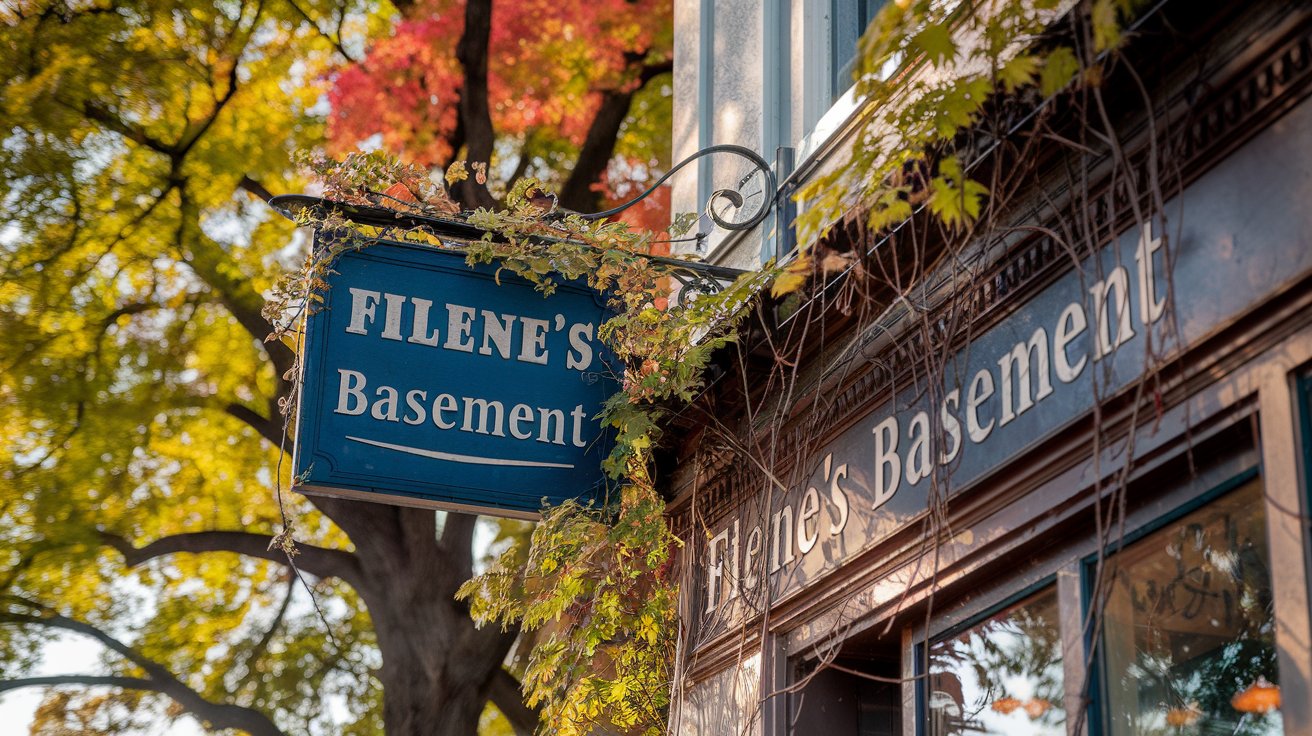
No, Filene’s Basement is not still in business. The iconic discount department store chain permanently closed all its locations in December 2014 after filing for bankruptcy twice in five years. While the original Filene’s department store was acquired by Macy’s in 2006, Filene’s Basement operated separately until its final closure, marking the end of an era for American discount retail shopping.
Current Status of Filene’s Basement in 2024
Filene’s Basement permanently closed all of its remaining stores in December 2014, and as of 2024, the company remains out of business with no plans for revival. The discount retailer, which once operated over 40 locations across the United States, shuttered its doors after struggling with financial difficulties and changing consumer shopping patterns. The closure affected thousands of employees and left many loyal customers searching for alternative discount shopping destinations.
The brand’s intellectual property and remaining assets were sold during the bankruptcy proceedings, but no new ownership group has attempted to revive the Filene’s Basement business model. The retail landscape has shifted significantly since 2014, with online shopping and off-price retailers like TJ Maxx and Nordstrom Rack dominating the discount market that Filene’s Basement once helped pioneer.
History and Timeline of Filene’s Basement
Filene’s Basement was founded in 1908 as the bargain basement of Filene’s department store in Boston, Massachusetts. The concept revolutionized discount retail by offering designer and brand-name merchandise at significantly reduced prices, often featuring automatic markdowns based on how long items remained on the sales floor. This innovative pricing strategy made Filene’s Basement a destination for bargain hunters and fashion-conscious shoppers alike.
The store expanded beyond its original Boston location throughout the 20th century, becoming a standalone chain separate from the main Filene’s department store. At its peak, Filene’s Basement operated locations in major metropolitan areas including New York, Washington D.C., Philadelphia, and Chicago, serving millions of customers annually with its unique blend of high-end merchandise at discount prices.
The Separation from Filene’s Department Store
In 1988, Filene’s Basement became independent from its parent Filene’s department store, operating as a separate company with its own management structure and business strategy. This separation allowed the basement concept to expand more aggressively while maintaining its distinct identity as a discount retailer. The move proved successful initially, with the company opening new locations and building a loyal customer base across the northeastern United States.
Peak Years and Expansion
During the 1990s and early 2000s, Filene’s Basement experienced significant growth, expanding to over 40 locations nationwide and generating hundreds of millions in annual revenue. The company’s success was built on its ability to secure high-quality merchandise from major brands and designers, offering these items at substantial discounts through its famous automatic markdown system that reduced prices every few weeks.
The Difference Between Filene’s and Filene’s Basement
Filene’s was a traditional department store founded in 1881 by William Filene, offering full-price merchandise across multiple departments including clothing, home goods, and accessories. The store positioned itself as an upscale retailer competing with other department stores like Macy’s and Jordan Marsh. Filene’s operated primarily in the New England region and was known for its quality merchandise and customer service.
Filene’s Basement, in contrast, was a discount retailer that originated in the basement level of the original Filene’s store in Boston. The basement concept focused exclusively on offering brand-name and designer merchandise at significantly reduced prices, typically 20-60% below regular retail prices. This fundamental difference in business model and target market allowed both entities to coexist and serve different customer segments.
Business Model Differences
The Filene’s department store business model relied on traditional retail practices with seasonal sales and standard markup pricing. Meanwhile, Filene’s Basement pioneered the off-price retail concept, purchasing excess inventory from manufacturers and other retailers to offer at discounted prices. This approach required different supplier relationships, inventory management, and pricing strategies.
Target Customer Base
Filene’s targeted middle to upper-middle class customers seeking quality merchandise at regular department store prices, while Filene’s Basement attracted bargain hunters and fashion-conscious shoppers looking for designer goods at discount prices. The basement store drew customers from diverse economic backgrounds, all united by their desire to find high-quality merchandise at reduced costs.
What Happened to Filene’s Department Store
Filene’s department store was acquired by Macy’s in 2006 as part of a larger consolidation in the department store industry. The acquisition was completed when Federated Department Stores, which owned Macy’s, purchased the May Department Stores Company, which had previously acquired Filene’s. This merger resulted in most Filene’s locations being converted to Macy’s stores or closed entirely.
The Macy’s buyout of Filene’s represented a significant shift in American retail, as many regional department store chains were absorbed by larger national retailers. Some former Filene’s locations were rebranded as Macy’s, while others were closed due to overlapping market presence or poor performance. The acquisition effectively ended the Filene’s department store brand after more than 125 years of operation.
Financial Struggles and Bankruptcy
Filene’s Basement filed for bankruptcy twice in its final years, first in 2009 and again in 2014, reflecting the challenging retail environment and increased competition from online retailers and other discount chains. The company struggled with declining sales, high operating costs, and difficulty adapting to changing consumer shopping preferences. The rise of e-commerce and the proliferation of outlet malls also contributed to the company’s financial difficulties.
The second bankruptcy in 2014 proved fatal for the retailer, as no viable buyers emerged to rescue the company. The liquidation process began in late 2014, with all remaining stores closing by December of that year. The bankruptcy highlighted the challenges facing traditional brick-and-mortar retailers in an increasingly digital marketplace.
Reasons for the Final Closure
Filene’s Basement’s closure resulted from multiple factors including increased competition from online retailers, changing consumer shopping habits, and the company’s inability to modernize its business model. The retailer struggled to compete with online discount sites and flash sale websites that offered similar merchandise with greater convenience and often better prices.
Impact on Employees and Customers
The closure of Filene’s Basement affected thousands of employees across its 40+ locations, with many losing their jobs during the holiday season of 2014. Loyal customers who had shopped at the stores for decades were left searching for alternative discount retailers, many expressing disappointment at losing what they considered a unique shopping experience.
Current Alternatives to Filene’s Basement
Since Filene’s Basement closed in 2014, several discount retailers have expanded to fill the void left by the iconic chain. TJ Maxx, Marshall’s, and Nordstrom Rack have become the primary destinations for customers seeking designer and brand-name merchandise at discounted prices. These retailers employ similar business models to Filene’s Basement, purchasing excess inventory and offering significant savings to consumers.
Online alternatives have also emerged, with discount retail websites like Gilt, Rue La La, and HauteLook offering flash sales and designer merchandise at reduced prices. These platforms have captured much of the market that Filene’s Basement once served, providing the convenience of online shopping combined with the excitement of finding designer bargains.
Legacy and Impact on Retail Industry
Filene’s Basement pioneered the off-price retail concept that continues to influence the retail industry today. The company’s automatic markdown system and focus on offering designer merchandise at discount prices helped establish the template that modern off-price retailers like TJ Maxx and Nordstrom Rack continue to follow. The basement’s success demonstrated that there was significant consumer demand for high-quality merchandise at reduced prices.
The retail industry learned valuable lessons from Filene’s Basement’s rise and fall, particularly about the importance of adapting to changing consumer preferences and the challenges of competing in an increasingly digital marketplace. The company’s closure served as a cautionary tale about the need for traditional retailers to evolve their business models to remain relevant in the modern retail landscape.
Related video about is filene’s basement still in business
This video complements the article information with a practical visual demonstration.
Frequently Asked Questions
Is Filene’s department store still in business?
No, Filene’s department store is no longer in business as an independent brand. The chain was acquired by Macy’s in 2006, and most locations were either converted to Macy’s stores or closed. The Filene’s brand was discontinued as part of the consolidation of regional department store chains into larger national retailers.
Did Macy’s buyout Filene’s?
Yes, Macy’s parent company Federated Department Stores acquired Filene’s in 2006 through the purchase of May Department Stores Company. This acquisition resulted in most Filene’s locations being converted to Macy’s stores or closed entirely, effectively ending the Filene’s department store brand after 125 years of operation.
Who bought Filene’s Basement after it closed?
No company bought Filene’s Basement after its closure in 2014. The retailer filed for bankruptcy twice and was liquidated, with its assets sold during the bankruptcy proceedings. No buyer emerged to revive the brand, and it remains permanently closed with no plans for reopening as of 2024.
What made Filene’s Basement different from other discount stores?
Filene’s Basement was unique for its automatic markdown system, where prices were reduced every few weeks until items sold. The store specialized in offering designer and brand-name merchandise at 20-60% below regular retail prices, creating a treasure-hunt shopping experience that attracted bargain hunters and fashion enthusiasts alike.
Are there any stores similar to Filene’s Basement today?
Yes, several retailers offer similar experiences to Filene’s Basement, including TJ Maxx, Marshall’s, and Nordstrom Rack. These off-price retailers use similar business models, purchasing excess inventory from manufacturers and offering designer merchandise at discounted prices. Online alternatives include Gilt, Rue La La, and HauteLook.
When did Filene’s Basement permanently close?
Filene’s Basement permanently closed all its remaining stores in December 2014 after filing for bankruptcy for the second time in five years. The closure affected over 40 locations nationwide and marked the end of a 106-year history as one of America’s pioneering discount retailers.
| Key Aspect | Important Details | Current Status |
|---|---|---|
| Filene’s Basement | Permanently closed December 2014 | Out of business, no revival plans |
| Filene’s Department Store | Acquired by Macy’s in 2006 | Brand discontinued, locations converted |
| Business Model | Off-price retail with automatic markdowns | Adopted by TJ Maxx, Nordstrom Rack |
| Market Position | Pioneer in discount designer retail | Replaced by online and off-price retailers |

