
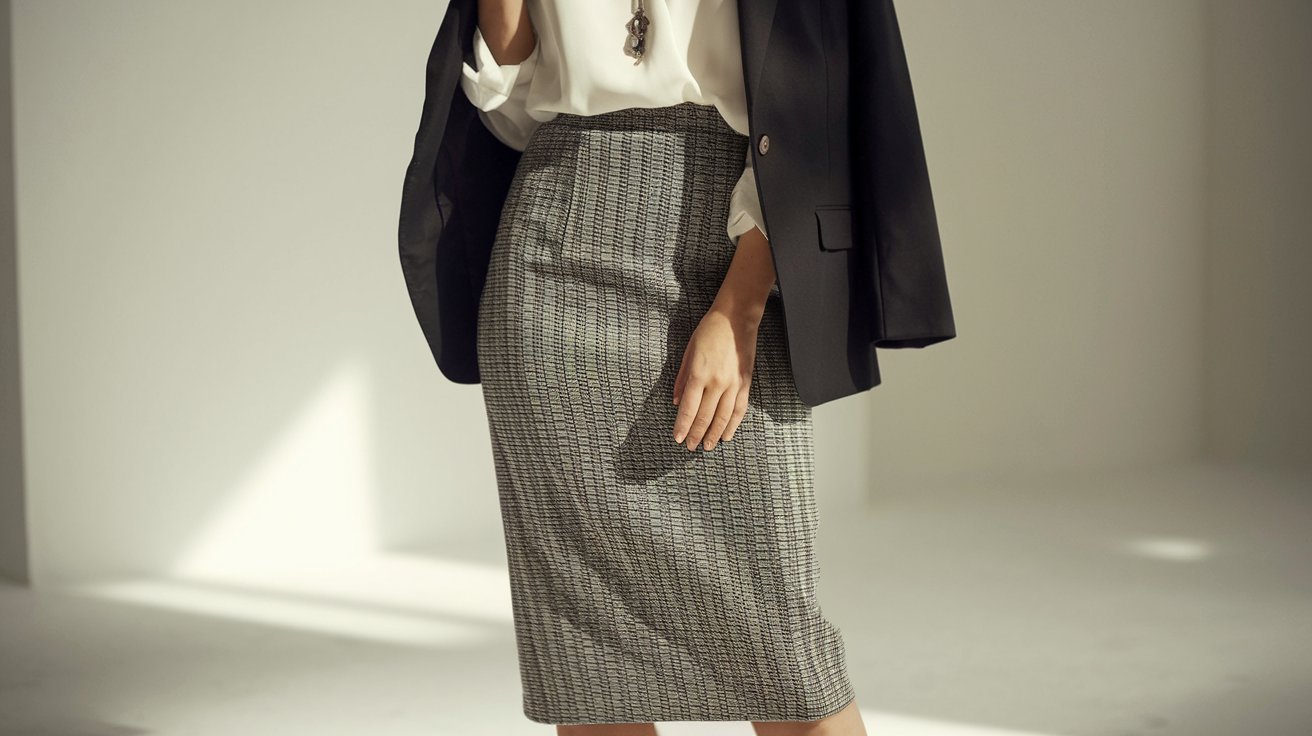
A pencil skirt is a fitted, straight-cut skirt that typically falls at or below the knee, designed to create a sleek, professional silhouette. This timeless wardrobe staple gets its name from its narrow shape that resembles a pencil, hugging the body from waist to hem without flaring out. Understanding what makes a pencil skirt unique helps you make informed fashion choices for both professional and casual settings.
Definition and Characteristics of a Pencil Skirt
A pencil skirt is fundamentally defined by its fitted, straight-line silhouette that follows the natural curves of the body without adding volume. The skirt typically measures between 18-24 inches in length and features a high-waisted design that sits at or just above the natural waistline. Made from structured fabrics like wool, cotton blends, or ponte knits, pencil skirts maintain their shape while providing comfort and mobility.
The distinguishing feature of a pencil skirt is its tapered cut that creates a streamlined appearance from hip to hem. Unlike A-line skirts that flare outward, pencil skirts maintain consistent width throughout their length, creating the characteristic narrow shape that defines this classic style. Most pencil skirts include practical elements like back vents or side slits to ensure comfortable movement while maintaining their sleek profile.
The History and Cultural Evolution of Pencil Skirts
The pencil skirt emerged in the 1940s as a revolutionary departure from the fuller skirts of previous decades. Christian Dior’s “New Look” collection in 1947 popularized the fitted skirt style, which became a symbol of post-war femininity and sophistication. The 1950s saw the pencil skirt become a wardrobe essential, with Hollywood icons like Marilyn Monroe and Grace Kelly showcasing its elegant appeal on screen and red carpets.
During the 1960s and beyond, the pencil skirt evolved into a symbol of women’s professional empowerment, becoming standard office attire across corporate America. The style experienced various revivals throughout the decades, with designers continuously updating the classic silhouette to reflect contemporary fashion trends while maintaining its core characteristics. In 2024-2025, pencil skirts remain a cornerstone of professional wardrobes, with modern interpretations featuring sustainable fabrics and inclusive sizing.
Key Differences Between Pencil Skirts and Other Skirt Types
Understanding the difference between pencil skirts and other popular styles helps clarify their unique appeal. While A-line skirts flare out from the waist to create a triangular silhouette, pencil skirts maintain a consistent narrow width throughout their length. This fundamental difference affects both the visual impact and practical wearability of each style, with pencil skirts offering a more form-fitting and structured appearance.
The distinction between a pencil skirt and a tube skirt lies primarily in construction and fit. While both styles are fitted, tube skirts typically have a more relaxed, stretchy construction without the tailored seaming found in pencil skirts. Straight skirts share similarities with pencil skirts but often feature a slightly looser fit and may not taper as dramatically toward the hem, making them more forgiving for various body types while still maintaining a professional appearance.
Pencil Skirt vs A-Line Skirt Construction
The construction difference between pencil skirts and A-line skirts fundamentally impacts their fit and styling versatility. Pencil skirts require precise tailoring with darts and seams to create their signature fitted silhouette, while A-line skirts use a wider hem circumference to achieve their flared shape. This construction difference makes pencil skirts ideal for creating streamlined, professional looks that emphasize body curves, whereas A-line skirts offer more movement and are generally more forgiving for various body types.
Tube Skirt vs Pencil Skirt Design Elements
While both tube skirts and pencil skirts feature fitted silhouettes, their design approaches differ significantly. Tube skirts typically rely on stretchy fabrics and minimal seaming for their fit, creating a more casual, body-conscious look. Pencil skirts, conversely, incorporate structured tailoring elements like waistbands, darts, and often include functional details such as back vents or kick pleats that enhance both appearance and mobility while maintaining their sophisticated, professional aesthetic.
Body Types That Look Best in Pencil Skirts
Determining which body type looks best in pencil skirts depends on individual proportions and personal style preferences. Generally, pencil skirts complement hourglass figures by accentuating natural curves, while pear-shaped bodies benefit from the way pencil skirts create a balanced silhouette by emphasizing the waist. Apple-shaped figures can use high-waisted pencil skirts to create definition, while rectangle body types can add curves through the fitted design.
The key to making pencil skirts work for any body type lies in proper fit and styling choices. Petite frames often benefit from shorter pencil skirts that don’t overwhelm their proportions, while taller figures can wear longer lengths with confidence. The high-waisted style particularly flatters those looking to create an hourglass silhouette, regardless of natural body shape, by defining the waist and creating smooth lines through the hip and thigh area.
Styling Tips for Different Body Shapes
For pear-shaped figures, pencil skirts work best when paired with structured tops that balance wider hips with broader shoulders. Choose skirts that fit smoothly over the hips without pulling or creating unwanted lines. Apple-shaped bodies should focus on high-waisted pencil skirts that sit above the natural waist to create definition, while selecting fabrics with enough stretch to ensure comfort without compromising the skirt’s structured appearance.
Fit Considerations for Optimal Appearance
The perfect pencil skirt fit requires careful attention to waist placement, hip measurement, and length proportions. The waistband should sit comfortably at the natural waist without rolling or creating bulges, while the hip area should skim the body without being too tight or loose. Proper length is crucial – the skirt should end at the most flattering point of the leg, typically at or just below the knee, to create an elongating effect that enhances the overall silhouette.
How to Style a Pencil Skirt for Different Occasions
Styling a pencil skirt effectively requires understanding how to adapt this versatile piece for various occasions and settings. For professional environments, pair your pencil skirt with a crisp button-down shirt or structured blazer to create a polished, authoritative look. The key is maintaining the skirt’s sophisticated silhouette while adding complementary pieces that enhance rather than compete with its streamlined design.
For casual occasions, pencil skirts can be styled with softer fabrics and relaxed silhouettes on top. Try pairing a denim or cotton pencil skirt with a fitted tee or casual blouse for a balanced look that’s both comfortable and stylish. Evening styling allows for more dramatic pairings – consider a black pencil skirt with a silk camisole or fitted sweater for dinner dates or social events, adding heels and statement jewelry to complete the sophisticated ensemble.
Professional and Office Styling
In professional settings, pencil skirts should be styled to convey competence and sophistication. Pair them with structured blazers, crisp shirts, or professional blouses in neutral colors like navy, black, or gray. The length should be appropriate for your workplace – typically knee-length or slightly below. Complete the look with closed-toe shoes and minimal, professional accessories that don’t distract from the clean lines of the pencil skirt silhouette.
Casual and Weekend Styling Options
For casual wear, pencil skirts can be styled down with relaxed tops and comfortable footwear. Try pairing a cotton or denim pencil skirt with a graphic tee, cardigan, or casual blouse for weekend activities. Sneakers, flat sandals, or ankle boots work well for casual styling, while still maintaining the polished appearance that makes pencil skirts so versatile. Layer with denim jackets or casual blazers for transitional weather while preserving the skirt’s flattering silhouette.
Fabric Choices and Quality Considerations
The choice of fabric significantly impacts both the appearance and functionality of a pencil skirt. Traditional fabrics like wool, cotton twill, and ponte knits provide structure and durability while maintaining the skirt’s shape throughout wear. These classic fabrics offer the right balance of stretch and support, ensuring the skirt fits properly without becoming too loose or tight during movement.
Modern pencil skirts often incorporate stretch fabrics like elastane or spandex blends that provide comfort without sacrificing the tailored appearance. High-quality fabrics resist wrinkles, maintain their shape after washing, and feel comfortable against the skin. When selecting a pencil skirt, consider factors like breathability, care requirements, and seasonal appropriateness – lightweight fabrics work well for summer, while heavier materials like wool or corduroy are ideal for cooler months.
Popular Pencil Skirt Lengths and Styles in 2024-2025
Current trends in pencil skirt lengths for 2024-2025 show a preference for versatile midi lengths that fall between the knee and mid-calf. This length offers maximum versatility for both professional and casual styling while maintaining the elegant proportions that make pencil skirts so flattering. Short pencil skirts remain popular for younger demographics and casual occasions, typically ending 2-3 inches above the knee.
The trend toward high-waisted pencil skirts continues to dominate fashion in 2025, with designers creating styles that emphasize the waist and create an hourglass silhouette. Modern interpretations include subtle details like contrast stitching, functional pockets, and sustainable fabric choices that appeal to environmentally conscious consumers. Color trends favor classic neutrals like black, navy, and gray, with seasonal pops of color in jewel tones and earth tones gaining popularity among American consumers.
Care and Maintenance of Pencil Skirts
Proper care extends the life and appearance of your pencil skirt investment. Most structured pencil skirts benefit from dry cleaning to maintain their shape and fabric integrity, especially those made from wool or other delicate materials. However, many modern pencil skirts in cotton blends or synthetic fabrics can be machine washed on gentle cycles with cold water to prevent shrinkage and color fading.
Storage plays a crucial role in maintaining the pencil skirt’s silhouette. Hang skirts on appropriate hangers that support the waistband without creating creases, and avoid overcrowding in closets that can cause wrinkles. For travel, fold pencil skirts carefully with tissue paper to prevent creasing, and steam or press gently upon arrival to restore their crisp appearance. Regular maintenance includes checking for loose threads, missing buttons, or worn areas that might need professional repair to keep your pencil skirt looking its best.
Related video about what is a pencil skirt
This video complements the article information with a practical visual demonstration.
Questions & Answers
What is the point of a pencil skirt?
The point of a pencil skirt is to create a sophisticated, streamlined silhouette that emphasizes the natural curves of the body while maintaining a professional appearance. Pencil skirts are designed to be versatile wardrobe staples that can be styled for both business and casual occasions, offering a flattering fit that works across different body types and age groups.
What body type looks good in pencil skirts?
Pencil skirts are flattering on most body types when properly fitted. Hourglass figures are naturally complemented by the fitted silhouette, while pear shapes benefit from the way pencil skirts balance proportions. Apple shapes can use high-waisted styles to create definition, and rectangle body types can add curves through the fitted design. The key is choosing the right fit and styling for your individual proportions.
What’s the difference between a tube skirt and a pencil skirt?
The main difference lies in construction and structure. Tube skirts typically have a more relaxed, stretchy construction without tailored seaming, while pencil skirts feature precise tailoring with darts and structured seaming. Pencil skirts offer a more sophisticated, professional appearance with better shape retention, whereas tube skirts are more casual and body-conscious with simpler construction.
What is the difference between an A-line skirt and a pencil skirt?
A-line skirts flare out from the waist to create a triangular silhouette, while pencil skirts maintain a consistent narrow width throughout their length. A-line skirts offer more movement and are generally more forgiving for various body types, while pencil skirts provide a more form-fitting, structured appearance that emphasizes body curves and creates a streamlined professional look.
What is a pencil skirt called in different contexts?
A pencil skirt may also be called a straight skirt, fitted skirt, or tube skirt depending on the specific style and construction. In professional settings, it’s often referred to as a business skirt or work skirt. The term ‘wiggle skirt’ was historically used in the 1950s to describe very fitted pencil skirts that required small steps to walk, though modern versions are designed with more practical mobility.
How should a pencil skirt fit properly?
A properly fitted pencil skirt should sit comfortably at the natural waist without rolling or creating bulges. The hip area should skim the body without being too tight or loose, allowing for comfortable sitting and walking. The length should end at the most flattering point of the leg, typically at or just below the knee, and there should be enough room to take normal steps without the skirt riding up or restricting movement.
| Key Aspect | Important Details | Benefit |
|---|---|---|
| Silhouette | Fitted, straight-line design that follows body curves | Creates streamlined, professional appearance |
| Versatility | Suitable for business, casual, and formal occasions | Maximizes wardrobe investment and styling options |
| Body Enhancement | Emphasizes waist and creates hourglass silhouette | Flatters various body types when properly fitted |
| Fabric Quality | Structured materials maintain shape and durability | Ensures longevity and consistent appearance |
| Professional Appeal | Conveys competence and sophistication in workplace | Builds confidence and professional image |

