
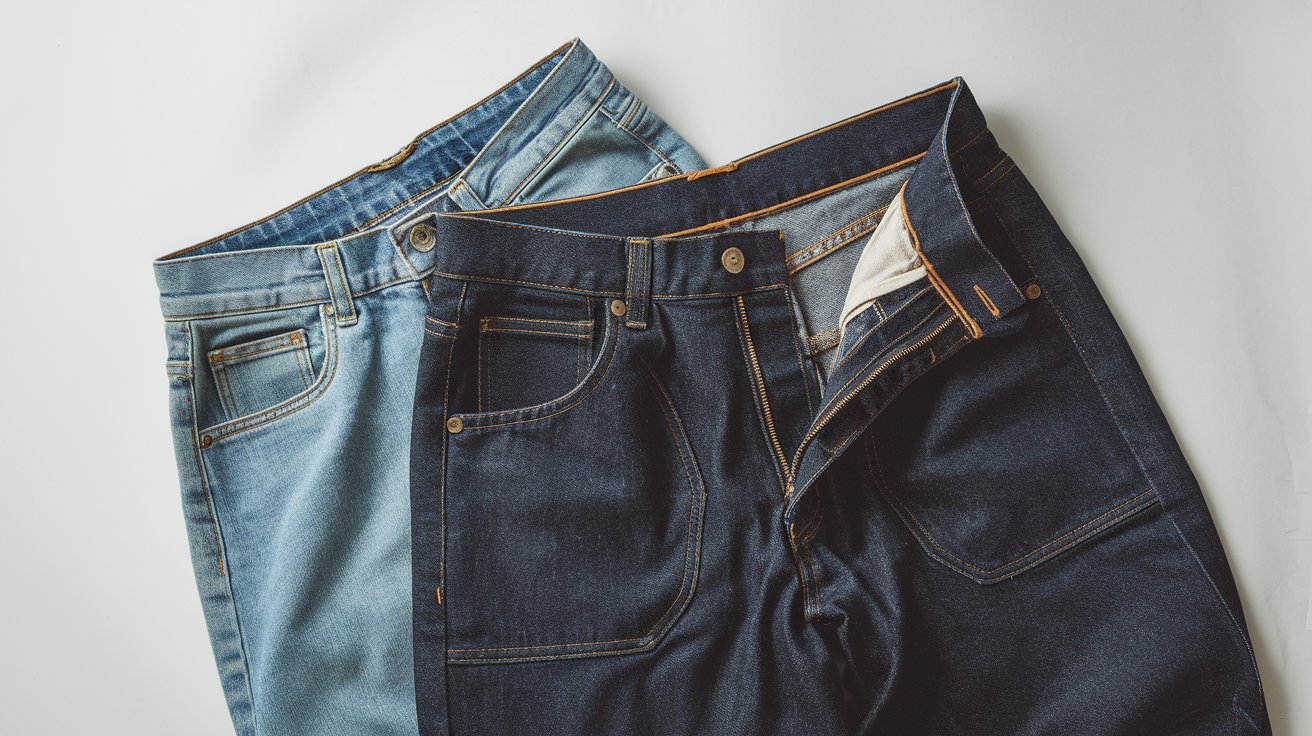
Understanding the difference between denim and jeans is crucial for making informed fashion choices. While these terms are often used interchangeably, denim refers to the sturdy cotton fabric itself, whereas jeans are the specific garment made from this material. This fundamental distinction affects everything from styling options to care instructions and price points.
What Is Denim: The Foundation Fabric
Denim is a robust cotton twill fabric characterized by its diagonal ribbing pattern and distinctive blue color. The denim fabric originated in the 18th century and gets its name from ‘serge de Nîmes,’ a fabric from Nîmes, France. The material’s strength comes from its unique weaving technique, where colored warp threads (typically indigo-dyed) are woven with white weft threads, creating the classic blue exterior and white interior.
Modern denim composition in the United States typically consists of 98-100% cotton, though contemporary blends may include 1-3% elastane for stretch. The fabric weight ranges from 10-15 ounces per square yard, with heavyweight denim being preferred for durability and lightweight versions for comfort. This versatile material serves as the foundation for various garments beyond traditional jeans.
Denim Fabric Construction and Weaving
The denim weaving process creates a right-hand twill pattern, distinguishing it from other cotton fabrics. Manufacturers use ring-spun cotton yarns that are rope-dyed with indigo, allowing for the characteristic fading patterns that develop over time. The selvage edges, found on premium denim, indicate traditional shuttle-loom construction and are highly valued by denim enthusiasts in 2024.
Types of Denim Material
Raw denim, also called dry denim, represents the purest form of the fabric without any washing or treatment. Sanforized denim has been pre-shrunk to prevent significant size changes, while unsanforized denim will shrink considerably after the first wash. Stretch denim incorporates elastane fibers, providing enhanced comfort and mobility for modern American consumers who prioritize both style and functionality.
Understanding Jeans: The Iconic Garment
Jeans are denim pants that have become synonymous with American casual wear since their invention by Jacob Davis and Levi Strauss in 1873. These garments feature specific design elements including riveted stress points, five-pocket styling, and distinctive stitching patterns. The term ‘jeans’ originally referred to the Genoese sailors who wore similar sturdy pants, but the American version transformed into a global fashion staple.
Contemporary jeans design encompasses various fits, rises, and lengths to accommodate diverse body types and style preferences. From skinny and slim-fit to relaxed and bootcut, the American denim market offers hundreds of variations. Premium jeans brands focus on craftsmanship, using techniques like hand-sanding, whiskering, and specialized washing processes to create unique finishes and textures.
Jeans Construction and Features
Traditional jeans construction includes reinforced seams, metal rivets at stress points, and the iconic five-pocket configuration. The back pockets often feature decorative stitching patterns that serve as brand identifiers. Modern manufacturing techniques in the United States incorporate laser technology for precise distressing and eco-friendly washing processes that reduce water consumption by up to 40%.
Jeans Fit and Styling Options
The jeans fit spectrum ranges from ultra-slim to relaxed fits, with each style serving different fashion purposes and body types. High-rise jeans have resurged in popularity among American consumers in 2024, while mid-rise options remain the most versatile choice. Cropped, ankle-length, and full-length variations provide additional styling flexibility for different occasions and seasonal preferences.
Key Differences Between Denim and Jeans
The primary difference between denim and jeans lies in their classification: denim is the raw material, while jeans are the finished product. This fundamental distinction affects manufacturing, pricing, and usage applications. Denim fabric can be purchased by the yard for various sewing projects, whereas jeans are ready-to-wear garments with specific sizing and fit specifications.
Another significant difference involves versatility and application. Denim fabric serves multiple purposes including jackets, shirts, skirts, and accessories, while jeans specifically refer to the pant-style garment. This versatility makes denim a more comprehensive term in the fashion industry, encompassing an entire category of clothing items rather than a single product type.
Manufacturing and Production Differences
Denim production focuses on fabric quality and consistency, involving cotton sourcing, dyeing processes, and weaving techniques. Jeans manufacturing requires additional steps including pattern cutting, sewing, finishing treatments, and quality control inspections. The production timeline for denim fabric typically spans 2-4 weeks, while complete jeans manufacturing can take 6-8 weeks from design to finished product.
Pricing and Market Positioning
Premium denim fabric pricing ranges from $15-50 per yard in the United States, depending on quality and source. Finished jeans retail from $30 for basic options to $400+ for luxury brands. The value-added processes in jeans manufacturing, including design, fit testing, and brand positioning, contribute significantly to the final retail price compared to raw denim material costs.
Denim vs Jeans: Styling and Fashion Applications
When considering denim and jeans style options, understanding their distinct applications helps create more versatile wardrobes. Denim as a fabric offers unlimited customization possibilities for DIY enthusiasts and designers. Raw denim can be tailored into unique garments, while pre-made jeans provide immediate styling solutions with established fit profiles and design elements.
The fashion versatility of denim extends beyond traditional jeans to include chambray shirts, denim jackets, and even formal wear applications. Contemporary American fashion embraces denim-on-denim styling, where different washes and textures create sophisticated layered looks. This trend demonstrates how understanding the fabric versus garment distinction enhances styling capabilities.
Care and Maintenance: Denim Fabric vs Jeans
Proper denim care varies significantly between raw fabric and finished jeans. Raw denim requires minimal washing to preserve its structure and allow natural fading patterns to develop. Many denim purists recommend waiting 6-12 months before the first wash, using cold water and air drying to maintain fabric integrity and prevent unnecessary shrinkage.
Finished jeans maintenance depends on the specific treatments and washes applied during manufacturing. Pre-washed jeans can be laundered more frequently without significant changes, while raw denim jeans require the same careful treatment as the fabric itself. Modern American consumers increasingly prefer low-maintenance options, driving demand for pre-treated denim that maintains its appearance through regular washing cycles.
Washing and Treatment Guidelines
Professional denim washing techniques include enzyme washing, stone washing, and acid washing, each creating distinct finishes and textures. Home care should focus on cold water washing, inside-out positioning, and air drying to prevent fading and shrinkage. Avoid bleach and fabric softeners, which can damage the cotton fibers and alter the fabric’s natural characteristics.
Storage and Preservation
Proper denim storage involves hanging or flat folding to prevent creasing and maintain shape. Raw denim should be stored in cool, dry conditions away from direct sunlight to prevent premature fading. Finished jeans benefit from cedar blocks or lavender sachets to maintain freshness during extended storage periods, particularly important for seasonal wardrobe rotation.
Market Trends and Consumer Preferences in 2024
The American denim market in 2024 shows strong preference for sustainable and ethically-produced options. Consumers increasingly value transparency in manufacturing processes, with 67% of millennials willing to pay premium prices for eco-friendly denim. This trend influences both raw denim production and finished jeans manufacturing, driving innovation in organic cotton sourcing and water-efficient processing techniques.
Premium jeans brands are experiencing growth in the $150-300 price range, as consumers invest in quality over quantity. The rise of direct-to-consumer brands has democratized access to high-quality denim, while traditional retailers focus on fit technology and personalization services. Raw denim enthusiasts continue to support heritage brands that maintain traditional manufacturing methods and craftsmanship standards.
Related video about difference between denim and jeans
This video complements the article information with a practical visual demonstration.
Important things to know about difference between denim and jeans
Is denim the same as jeans?
No, denim and jeans are not the same. Denim is the cotton twill fabric used to make various garments, while jeans are the specific pants made from denim fabric. Denim can be used for jackets, shirts, skirts, and other clothing items, whereas jeans specifically refer to the pant-style garment with characteristic features like five pockets and riveted stress points.
Do jeans count as denim?
Yes, jeans are made from denim fabric, so they count as denim clothing. However, not all denim items are jeans. Jeans are a specific type of denim garment, while denim encompasses the entire category of clothing made from this sturdy cotton twill fabric, including jackets, shirts, skirts, and accessories.
Can jeans only be made from denim?
Traditionally, yes, authentic jeans are made from denim fabric. However, modern fashion has introduced jean-style pants made from other materials like corduroy, leather, or synthetic fabrics. These maintain the classic five-pocket design and fit of traditional jeans but use different base materials. True jeans, by definition, are constructed from cotton denim fabric.
What is the difference between denim pants and jeans?
The terms are often used interchangeably, but there are subtle differences. Jeans specifically refer to the classic five-pocket, riveted pants invented by Levi Strauss. Denim pants is a broader category that includes any pant-style garment made from denim fabric, including jeans, denim trousers, and other variations that may not have traditional jeans features like rivets or the classic pocket configuration.
Is denim another word for jeans?
No, denim is not another word for jeans. Denim is the fabric name, derived from ‘serge de Nîmes,’ while jeans is the garment name. Using these terms interchangeably is common in casual conversation, but they technically refer to different things. Denim is the material, and jeans are one specific type of garment made from that material.
Why do people confuse denim and jeans?
The confusion stems from the strong association between denim fabric and jeans as the most popular garment made from it. Since jeans are the most recognizable denim item, many people use the terms interchangeably. Additionally, marketing and casual conversation often blur the distinction, leading to widespread confusion about the technical differences between the fabric and the finished garment.
| Key Aspect | Denim | Jeans |
|---|---|---|
| Definition | Cotton twill fabric | Specific garment made from denim |
| Applications | Jackets, shirts, skirts, accessories | Pants with five-pocket design |
| Purchase Format | Sold by the yard | Ready-to-wear garment |
| Customization | Unlimited design possibilities | Limited to fit and wash variations |
| Price Range | $15-50 per yard | $30-400+ per garment |

